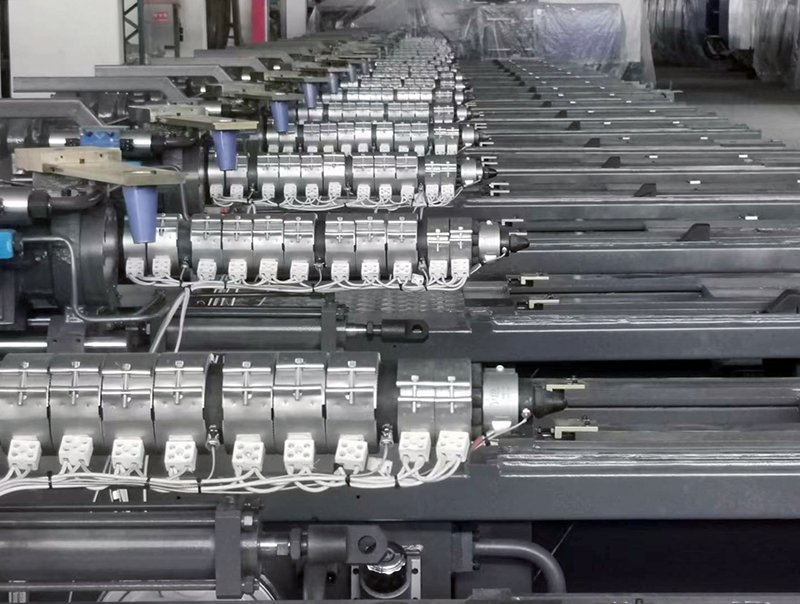
As an industry professional, I’m often asked about the performance parameters of the clamping part in an injection molding machine. A detailed understanding of these parameters is crucial in effectively operating these machines, ensuring the production of high-quality plastic components.
The clamping force of an injection molding machine is the locking force (KN).
This force prevents the mold from being pushed open by the expansion force during injection, hence ensuring the consistency and quality of the molded parts.
By understanding these parameters, operators can optimize the machine’s performance and prolong its lifespan.
This post will delve deeper into the locking force and how it is influenced by various factors.
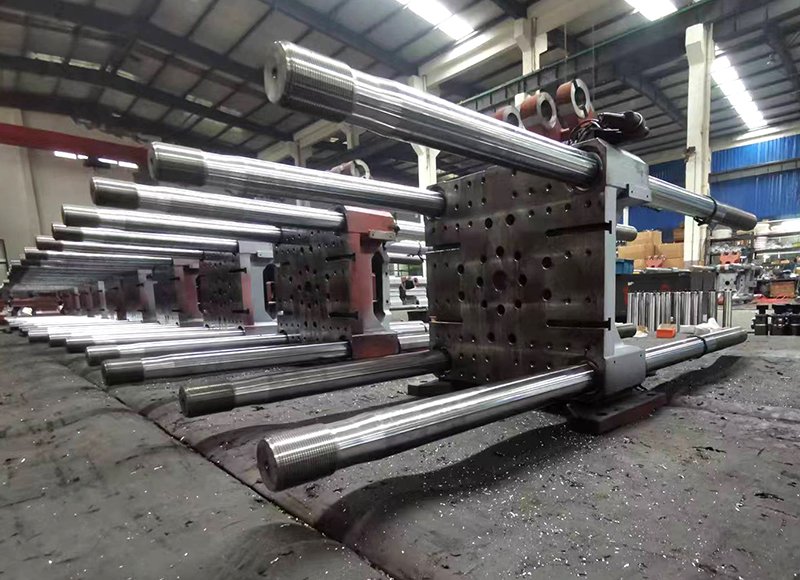
—
What Factors Influence the Locking Force?
The locking force depends on various elements.
The main one is the mold cavity pressure, which is influenced by factors like the injection pressure, holding pressure, resin temperature, injection speed, product wall thickness and shape, melt flow distance, and holding time.
The calculation of the locking force involves measuring changes in the mold cavity pressure and calculating the average pressure.
—
What are Some Examples of Average Cavity Pressure in Various Molding Conditions?
Here are some examples:
- Easy-to-mold products (25 Mpa): Uniform wall thickness containers like PE, PP, PS, etc.
- General products (30 Mpa): High-temperature molds for thin-walled containers
- High viscosity resins and products with high precision requirements (35 Mpa): Industrial parts with precision requirements such as ABS and PMMA.
- High viscosity, high precision, and hard-to-mold products (40 Mpa): Mechanical engineering parts, high-precision gears, cams.
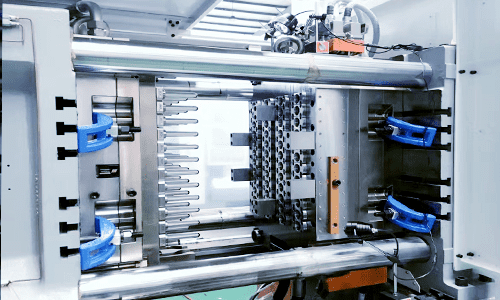
—
How Does the Locking Force Impact the Machine?
The locking force plays a crucial role in the structural size and weight of the machine and directly affects the quality of the product.
It also reflects the machine’s ability to process products and is often used as the main parameter representing the size of the machine specifications.
In conclusion, understanding the main performance parameters of the locking part in an injection molding machine, especially the locking force, is crucial in optimizing the machine’s performance and ensuring the production of high-quality molded parts.